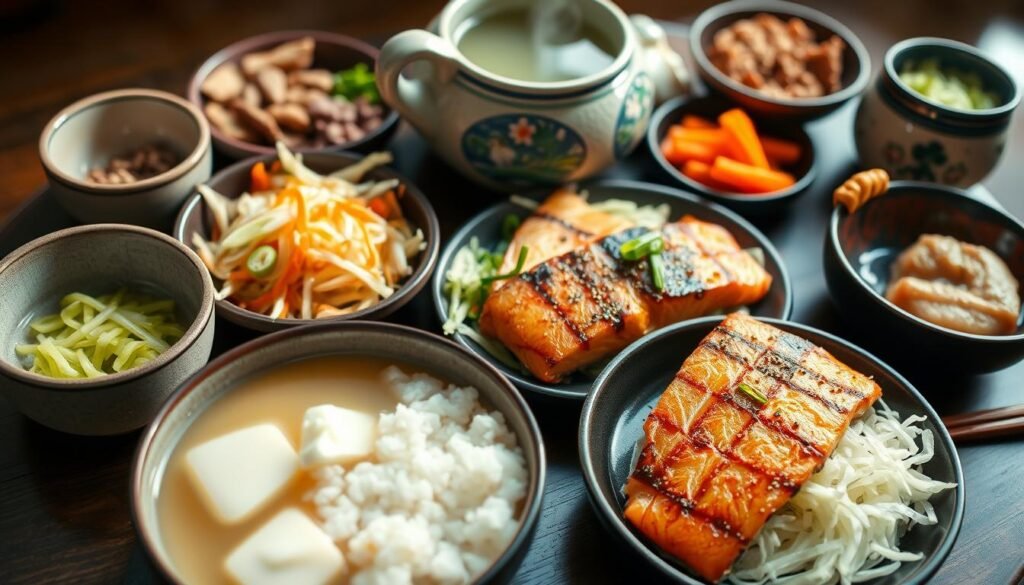
I love the calm start of a traditional Japanese breakfast. It’s simple: steamed rice, miso soup, grilled fish, tofu, and veggies. It feels nourishing and thoughtful.
These dishes follow the ichiju sansai rule. You get energy from rice, protein from fish, and probiotics from miso. Plus, fiber from veggies helps with digestion and focus.
In this collection, I share 10 easy, healthy Japanese breakfast recipes. You can make them even on busy days. From quick miso soup to make-ahead grilled salmon, these ideas are both authentic and easy.
Key Takeaways
- Traditional breakfasts pair rice, soup, protein, and small sides for balanced nutrition.
- Miso, fish, tofu, and vegetables deliver protein, fiber, omega‑3s, and probiotics.
- The 10 best Japanese breakfast recipes blend authenticity with easy prep for busy mornings.
- Many dishes use pantry staples like dashi, miso, and short‑grain rice for quick assembly.
- These healthy Japanese breakfast recipes support steady energy and better digestion.
Why I Love Traditional Japanese Breakfasts
I grew up watching my grandmother make breakfast. Each plate was small, bright, and full of thought. This taught me that Japanese breakfasts are a calm, thoughtful start to the day.
What defines a traditional morning spread
A Japanese breakfast starts with steamed rice. It’s joined by miso soup, a main protein, and two small sides. Pickles add a salty kick that wakes up your taste buds.
When I make this spread, I aim for variety in texture, color, and taste.
Balance of ichiju sansai for mornings
Ichiju sansai means one soup and three dishes. In the morning, we eat smaller portions. This keeps meals light and doesn’t fill us up too fast.
I choose flavors that are savory but not heavy. This way, they spark our appetite without feeling too full.
Typical components and how I use them
The core of a Japanese breakfast includes rice, soup, protein, pickles, and small sides. I often choose salted salmon or grilled mackerel for protein. Soft tofu or tamagoyaki offer comfort.
For vegetables, I pick blanched greens or braised daikon. Nori and furikake add a finishing touch.
| Component | Common Choices | What it adds |
|---|---|---|
| Steamed rice | Short-grain gohan | Energy, texture, meal anchor |
| Miso soup | White or red miso with dashi | Warmth, hydration, umami |
| Protein | Salted salmon, mackerel, tofu, eggs | Satiety, omega-3s, protein |
| Pickles | Takuan, umeboshi, cucumber tsukemono | Acidity, digestion aid, palate cleanser |
| Sides | Spinach ohitashi, braised daikon, natto | Vitamins, fiber, fermented benefits |
How this meal supports energy, digestion, and focus
Japanese breakfasts have the right mix of protein, carbs, and minerals. This keeps energy steady all morning.
Fermented foods and pickles help with digestion. Warm soup also aids digestion and keeps us hydrated.
The ritual of making a Japanese breakfast helps me focus. It slows down my morning, clears my mind, and keeps me focused without a crash later.
japanese breakfast recipes traditional and healthy
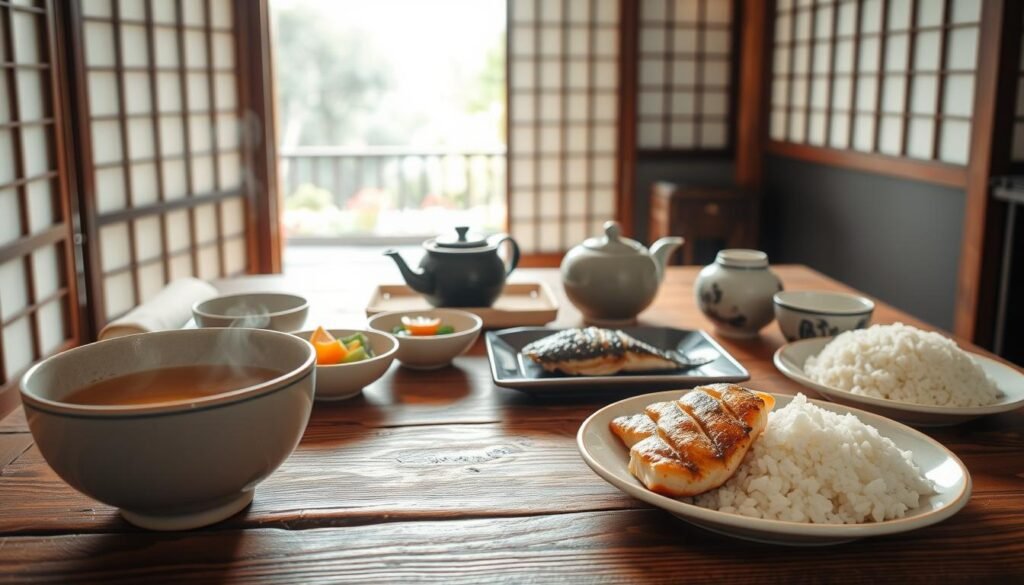
I focus on recipes that blend tradition with practical health. Readers search for dishes that honor flavor and deliver balanced nutrition. My aim is to show how simple tweaks keep authenticity while making these meals realistic for busy mornings.
Why this exact keyword matters for search and readers
People look for japanese breakfast recipes traditional and healthy when they want real flavors and proven benefits. They expect authentic japanese breakfast dishes that use whole ingredients like rice, miso, and grilled fish. They also want healthy japanese breakfast options that fit modern diets and time limits.
How traditional elements contribute to healthy macros and micronutrients
Steamed short-grain rice offers carbohydrates and gentle energy. Miso provides protein, probiotics, and B vitamins. Grilled salmon and mackerel supply high-quality protein and omega-3 fats. Sea vegetables add iodine and trace minerals. Modest portions encourage calorie control.
How I adapt traditional recipes for modern, busy mornings
I simplify with timers and smart swaps. I set the rice cooker overnight and use instant dashi to speed miso soup. I salt or cure salmon ahead and keep portions of tamagoyaki or boiled eggs ready. For quick protein, I reach for natto or a soft-boiled egg paired with pickles and rice.
Below is a quick comparison to help readers pick a morning combo by time, prep effort, and nutrition.
| Morning Combo | Prep Time | Ease | Key Nutrients |
|---|---|---|---|
| Rice + Miso Soup + Grilled Salmon | 20–30 min (with prepped rice) | Moderate | Protein, omega-3s, probiotics, iodine |
| Rice + Natto + Pickles | 5–10 min | Easy | Protein, vitamin K2, probiotics, fiber |
| Okayu (rice porridge) with Salmon Flakes | 10–15 min | Easy | Gentle carbs, protein, electrolytes |
| Tamagoyaki + Steamed Greens + Nori | 10–15 min (batch-cooked feasible) | Easy to Moderate | Protein, vitamin A, calcium, iron |
| Ochazuke with Tea and Pickled Plum | 5 min | Very Easy | Hydration, light carbs, antioxidants, sodium control |
I test these variations to keep them true to authentic japanese breakfast dishes while making them easy for hectic mornings. My goal is practical meals that feel traditional and support daily health.
Essential ingredients and pantry staples for authentic Japanese breakfasts
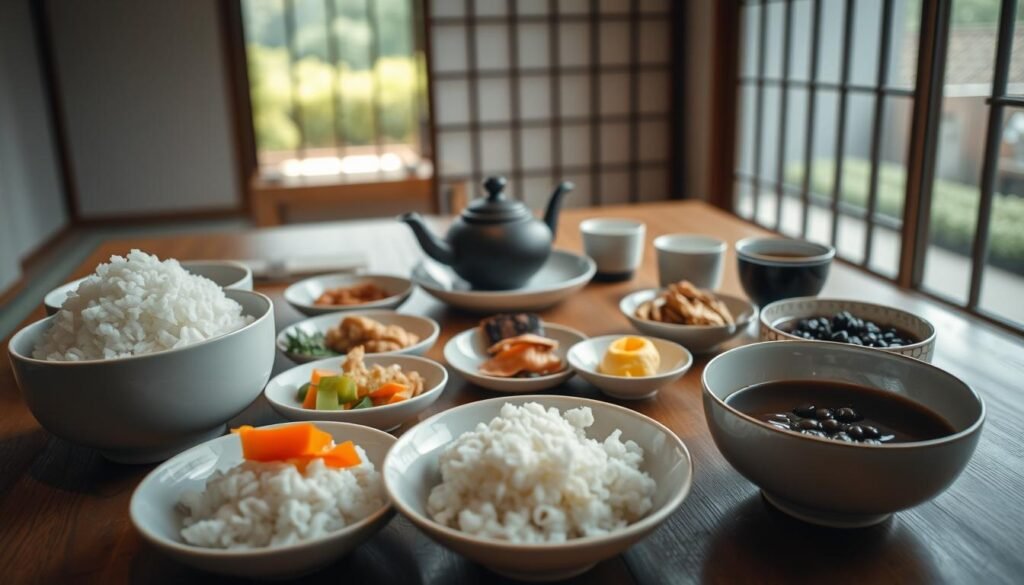
I have a small pantry that makes it easy to make authentic Japanese breakfasts. A few key items add umami, salt, and sweetness. This makes every dish balanced and complete.
Start with the basics. Short-grain rice is a must for gohan. Miso paste and dashi add depth to soups and sides. Soy sauce and mirin enhance sauces and glazes.
Staples and flavor bases
I keep steamed short-grain rice, different miso types, kombu, and katsuobushi for dashi. Soy sauce and mirin are always ready for quick flavor boosts. Seasoned nori sheets and instant dashi packets save time without losing taste.
Proteins I rely on
For protein, I switch between salted salmon, mackerel, eggs, firm tofu, and natto. Salted salmon can be bought ready or made at home. Eggs are great for tamagoyaki or onsen tamago. Natto is often found in refrigerated cases at markets.
Vegetables and condiments
My fridge has kombu for pickling and dashi, quick-pickle cucumbers, grated daikon for oily fish, wakame for miso soup, and jars of tsukemono. Ajitsuke nori adds flavor to rice and provides iodine and crunch.
Tools and time-saving tips
A rice cooker with a timer makes mornings easier. I use the oven broiler for even fish and a nonstick pan for tamagoyaki. Freezing make-ahead tamagoyaki slices and using instant dashi packets speed up recipes without losing flavor.
| Category | Items I Keep | Why I Use Them |
|---|---|---|
| Staples | Short-grain rice, miso (white, red), kombu, katsuobushi, soy sauce, mirin | Provide base flavor for rice, soups, and sauces in authentic japanese breakfast dishes |
| Proteins | Salted salmon (shake), mackerel, eggs (tamagoyaki, onsen), tofu, natto | Supply omega-3s, protein, and texture; adaptable to healthy japanese breakfast options |
| Veg & Condiments | Kombu, wakame, daikon, tsukemono (pickles), ajitsuke nori | Boost umami, add crunch, aid digestion, and balance fatty flavors |
| Tools & Prep | Rice cooker with timer, broiler, nonstick tamagoyaki pan, instant dashi, freezer-safe trays | Save time, allow make-ahead elements, and help execute homemade japanese breakfast recipes quickly |
I mix convenience with tradition for honest and nourishing breakfasts. These pantry items help me make healthy Japanese breakfasts easily. Whether it’s a full ichiju sansai or a simple rice and miso bowl, it’s all good.
1. Miso Soup: a comforting and nutritious breakfast staple
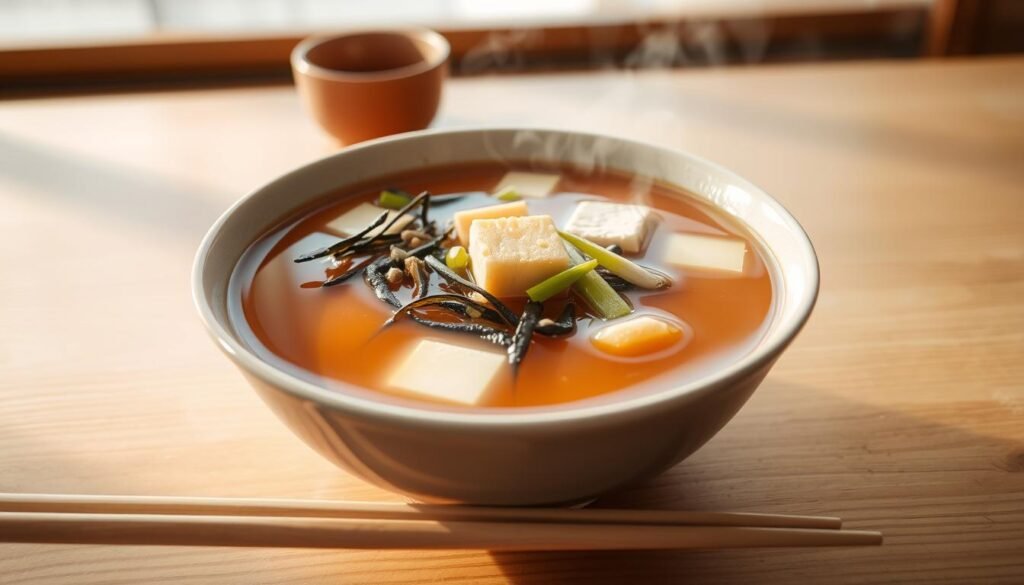
I start my day with a warm bowl of miso soup. It makes my meal feel complete and helps my stomach. This dish uses key Japanese breakfast items like rice and grilled fish.
I have different dashi options for quick or slow cooking. Kombu and katsuobushi make the best stock when simmered slowly. But, instant dashi powder is great for when I’m in a hurry.
Classic ingredients
I add tofu, wakame, shiitake mushrooms, and green onions to my soup. These ingredients are full of protein and minerals. For extra flavor, I sometimes add clams.
Protein and vegetable variations
Using soft tofu, baby spinach, and mushrooms saves time. I might also crack an egg into the soup for extra protein. These changes keep my breakfast simple yet nutritious.
Quick preparation tips
To avoid lumps, I mix miso with hot dashi before adding it to the soup. When I’m short on time, I use instant dashi and pre-cut veggies. This way, I can enjoy a warm miso soup breakfast in under ten minutes.
2. Grilled fish and salted salmon: omega-rich morning proteins

I start many mornings with a simple grilled fish breakfast. It feels traditional and light. Fish like shake (salted salmon), mackerel, and saba are common in Japan.
These fish pair well with rice, miso soup, grated daikon, and seasoned nori. It makes for a balanced bite.
I choose salted salmon for its ease and flavor. A simple salted salmon recipe gives firm flesh and a savory crust when broiled. You can buy pre-salted fillets or cure fresh salmon at home.
Nutrition is important to me. Fish is full of high-quality protein, omega-3 fatty acids, and vitamins A, D, and B-complex. These nutrients boost energy and brain function without making the meal heavy.
For make-ahead curing, I coat fillets with about 3% salt by weight. Then, I place them on paper towels in a single layer. I swap towels and flip the fish every 12 hours.
I cure for 24–48 hours, depending on thickness and desired saltiness. This method makes a reliably seasoned fillet ready to grill.
When I broil, I preheat the broiler and give each side only a few minutes. This makes the skin crisp and the flesh char lightly. If I’m short on time, I pan-grill with a touch of oil or use miso or sake lees marinades for variety.
Small portions like 2–3 ounces keep the meal balanced. This fits well with popular Japanese breakfast dishes and keeps me full.
Serve the fish with grated daikon, a wedge of lemon, or a splash of soy. These simple accompaniments brighten the flavor and keep the plate balanced.
3. Tamagoyaki and egg options: sweet-salty rolled omelet and quick eggs

I head to the kitchen, knowing eggs will save my morning. A good tamagoyaki recipe brings sweet-salty comfort to both kids and adults. For quick breakfasts, I turn to onsen tamago, soft-boiled eggs, or tamago kake gohan.
Basics and flavor ideas
Tamagoyaki starts with beaten eggs, a bit of sugar, soy, and sometimes dashi for umami. I add mirin or use instant dashi powder when I’m in a hurry. Sweet, dashi-forward, or soy-salty versions all pair well with steamed rice and pickles.
Speedy egg preparations
Onsen tamago offers a silky texture that’s special yet quick to make in a slow cooker or sous-vide. For fast breakfasts, I fry an egg sunny-side or mix raw egg with hot rice for tamago kake gohan. These egg options make Japanese breakfasts balanced and protein-rich.
Meal-prep and safe reheating
I make tamagoyaki in batches, cool it, slice, and freeze in airtight containers. To reheat, thaw briefly, then warm gently in a pan or microwave with a damp paper towel. Always refrigerate cooked eggs within two hours and use within the recommended time.
Practical tips for home cooks
When teaching tamagoyaki to friends, I stress even heat and small, steady folds for neat layers. For busy mornings, I use frozen slices with quick miso soup and rice for easy breakfasts that feel homemade.
Why eggs matter
Eggs offer quick protein and versatility in homemade Japanese breakfasts. By prepping tamagoyaki or keeping onsen tamago ready, I can make nourishing plates in minutes without losing flavor or tradition.
4. Natto with rice and fermented benefits
I grew up seeing neighbors eat small styrofoam packs of sticky beans for breakfast. Natto is fermented soybeans with a unique smell and texture. It’s not common at first, but Japanese families love it for its quick protein.
What natto is and why people value it
Natto is made from soybeans fermented by Bacillus subtilis var. natto. It has a tangy taste that some find hard to get used to. You can find it in the fridge at Nijiya Market, Mitsuwa, or local Asian stores.
People who eat it often say it gives them steady energy and better digestion. This is why it’s a big part of Japanese breakfasts.
Nutritional profile: protein, vitamin K2, probiotics, fiber
I count on natto for a quick nutrient boost. It’s packed with plant-based protein, fiber, and minerals. It’s also rich in vitamin K2 for bone health and probiotics for the gut.
These benefits make natto a top choice for a healthy Japanese breakfast.
How to serve natto (mixing techniques, toppings, pairing with rice)
To get the best texture, mix natto with chopsticks until it’s sticky and shiny. This makes the flavors pop and the smell softer. I add soy sauce, karashi mustard, and top it with scallions, sesame, or a raw yolk for extra richness.
I usually put natto on hot short-grain rice with miso soup and pickles. It’s a quick, no-cook protein that’s light yet filling. It’s perfect for busy mornings.
5. Rice porridge (okayu) and ochazuke: lighter and comforting breakfast bowls
I choose warm bowls for a gentle start. Rice porridge and ochazuke are perfect. They offer comfort and are easy to make.
Okayu is great for a soft, slow-cooked meal. Ochazuke is quick and packed with umami. Both are simple and honor Japanese traditions.
Differences and when to choose each
Okayu is a soft rice porridge. It’s made by simmering rice in water until it’s porridge-like. It’s good for upset stomachs and is filling.
Ochazuke is fast and easy. It uses leftover rice, savory toppings, and hot green tea. It’s perfect for busy mornings.
Simple recipes I use
For okayu, I use 1 part rice to 5 to 7 parts water. I add salt and a bit of butter or soy sauce for flavor.
Ochazuke is quick. I put rice in a bowl, add salmon or pickles, and pour hot tea over it. Sesame seeds and nori finish it in minutes.
Flavor add-ins and nutrient boosters
I add nutrients to both bowls. Salmon gives protein and omega-3s. Pickles and umeboshi add probiotics and acidity.
Nori and furikake boost umami and iodine. For more fiber and vitamins, I add steamed greens or edamame. These touches make the recipes healthy and fast.
6. Tofu salad and steamed vegetables: plant-forward healthy Japanese ideas
I start my day with light, savory flavors and crisp veggies. A simple tofu salad breakfast is balanced and bright. It fits well into plant-forward Japanese breakfast recipes and healthy options.
I use silken tofu chilled as hiyayakko for a cool, silky bite. I top it with scallion, soy, and katsuobushi. For a heartier texture, I choose firm tofu, pan-searing cubes until golden. Then, I toss them into salads with sesame and miso dressings.
Small dressings make a big difference. A splash of soy and rice vinegar with toasted sesame oil adds bright umami. A miso-sesame vinaigrette adds depth without heavy calories. Bonito flakes, toasted nori, and a spoonful of tahini-like goma dressing lift flavor and mouthfeel.
Greens complete the meal. I blanch spinach for ohitashi, then dress it lightly with soy and toasted sesame seeds. Grated daikon is perfect with oily fish and works as a palate cleanser. Steamed or blanched greens store well overnight, so I can assemble healthy Japanese breakfast options in minutes.
Below I compare quick tofu preparations and simple vegetable sides so you can pick what suits your morning routine.
| Component | Preparation | Time | Why I use it |
|---|---|---|---|
| Silken tofu (hiyayakko) | Chilled, scallion, soy, katsuobushi | 2–3 minutes | Soft texture, cooling contrast, authentic Japanese breakfast dishes |
| Firm tofu | Pan-seared cubes with sesame-miso dressing | 6–8 minutes | Higher browning, satisfying bite, versatile for salads |
| Spinach ohitashi | Blanched, squeezed, dressed with soy and sesame | 5 minutes (plus cooling) | Rich in iron and vitamins, packs well for busy mornings |
| Grated daikon | Peel and grate, serve with soy or ponzu | 3 minutes | Digestive aid, pairs with oily fish, brightens the plate |
| Quick steamed greens | Steam or blanch, chill for make-ahead use | 4–6 minutes | Fast fiber boost, complements tofu salad breakfast |
7. Pickled vegetables and nori: small components that lift flavor and digestion
I always have a few pickled vegetables Japanese style in my fridge. They make breakfast much better. A little bit of takuan or quick-pickled cucumber makes the dish pop and gets me hungry for more.
It’s easy to find tsukemono at U.S. Japanese grocers and specialty markets. I get takuan, fukujinzuke, cucumber pickles, and small packs of seasoned nori. The nori is great for wrapping rice or adding to bowls.
Seasoned nori adds texture and iodine to my meals. I cut it into small rectangles or tear it into flakes. This way, I can fold it around rice or sprinkle it over bowls. But I don’t buy big packs because nori loses its crispness once opened.
Quick tsukemono are perfect for busy mornings. I slice cucumber thin and mix it with salt, rice vinegar, and a bit of kombu. After 15 minutes, it’s a quick, refreshing pickle that goes well with grilled fish and steamed rice.
Pickles do more than just add flavor. They help with digestion and add good microbes to your meal. A little bit of pickle balances out richer foods like tamagoyaki or salted salmon in a traditional Japanese breakfast.
I serve pickles in small amounts as part of a tsukemono breakfast plate. This mix of sweet, sour, and salty flavors makes every bite better. It also helps with digestion and keeps the meal balanced.
8-10.Easy Japanese breakfast ideas and meal-prep tips for busy mornings
I plan my mornings the night before to stay calm. A rice cooker timer makes hot rice ready when I wake up. I marinate salmon or cure it for 24–48 hours to save time in the morning.
I soak kombu overnight for dashi, or use instant dashi for quick miso soup.
I make simple dishes ahead of time to save time. I blanch greens, make pickles, and freeze tamagoyaki. These steps help me make quick Japanese breakfasts.
Night-before prep
I set the rice cooker timer and season fish. I also measure out miso and dashi. If making dashi, I start it the night before to save time.
Using leftovers and store-bought staples
I turn last night’s veggies into quick sides. Leftover salmon becomes ochazuke. Frozen tamagoyaki and store-bought tsukemono save time.
I use ready-made natto and nori to make plates fast. This way, I can make homemade Japanese breakfasts quickly.
Build-ahead breakfast trays
I make trays with rice, miso soup, protein, pickles, and nori. Each part goes in its own container. This makes it easy for family members to grab their tray.
For quick mornings, I pack rice, miso, and sides in containers. This keeps meals balanced and saves time.
Quick assembly suggestions
Start with hot rice, add a protein like salmon, and spoon in miso soup. Finish with pickles and nori. I swap salmon for tofu or natto and change pickles weekly. These easy recipes make mornings simple and satisfying.
Conclusion
I’ve learned that Japanese breakfasts are simple and healthy. Rice is key, and sides like grilled fish and miso soup add flavor and nutrients. These dishes give you energy and clear your mind without being hard to make.
Japanese breakfasts can fit into your busy life. Use a rice cooker and quick ingredients to make a tasty meal fast. This way, you can enjoy a healthy start without spending a lot of time.
Try a Japanese breakfast once a week and make it your own. These meals are full of good stuff and easy to adjust. They make it simple to enjoy Japanese flavors in the morning.