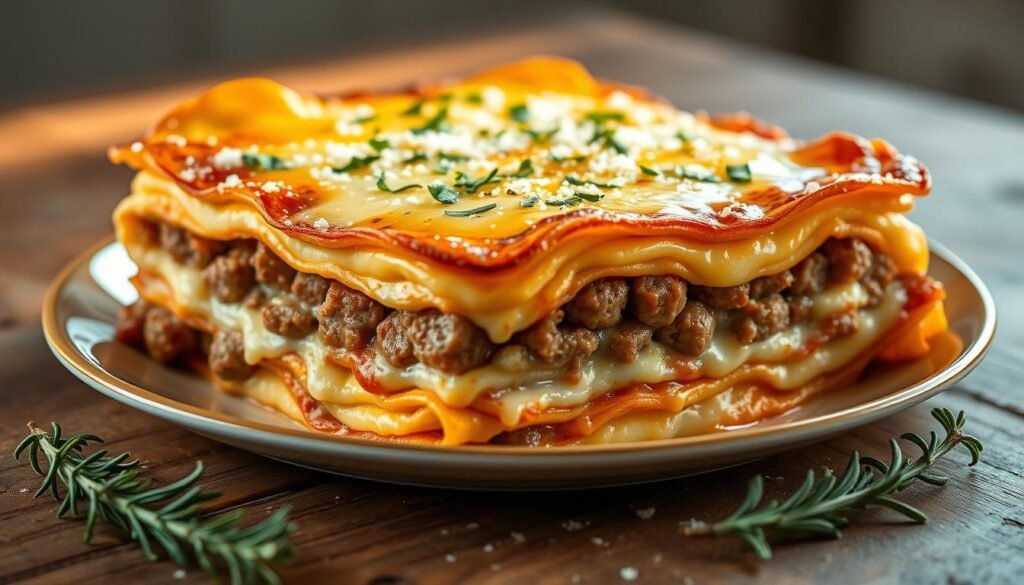
Breakfast lasagna with sausage and eggs is a fun and delicious twist on your daily morning routine. Imagine layers of pasta, sausage, and cheese. A yummy egg mix holds it all together. The smell of garlic and maple syrup fills the air. This dish makes mornings special, turning simple ingredients into a big, tasty meal.
I’ve made this recipe better by mixing Trisha Yearwood’s method with quick tips for busy people. No-boil noodles save time. The maple béchamel adds a fancy touch. It’s perfect for big gatherings, serving 8–10 people easily.
This breakfast casserole is special because you can change it up. Try turkey sausage or gluten-free pasta. Add roasted veggies for extra flavor. The golden top and creamy inside are irresistible. Even the pickiest eaters will want more.
Key Notes;
- Feeds a crowd with minimal effort—ideal for holidays or casual gatherings
- Combines classic Italian flavors with breakfast staples for unexpected deliciousness
- Uses oven-ready noodles and pre-cooked sausage to streamline preparation
- Maple-infused béchamel adds depth without overwhelming sweetness
- Easily customizable for dietary preferences or ingredient swaps
- Leftovers reheat beautifully—if there are any!
Why Breakfast Lasagna Beats Ordinary Casseroles
Breakfast lasagna is a new twist on morning meals. It has layers of sausage, eggs, and cheese on pasta sheets. This makes a dish that’s better than usual stratas.
The Rise of Savory Breakfast Stratas
Savory breakfast bakes have changed a lot. They used to be just bread puddings. Now, they have meats and cheeses.
But, old versions can get mushy. This is because bread soaks up liquid unevenly. Trisha Yearwood uses pasta sheets instead. They keep their shape and soak up flavors well.
Breakfast lasagna is also a hit because it’s easy to make. It looks fancy, even if it’s simple. This makes it perfect for special occasions.
Essential Components for Success
Three things make breakfast lasagna great:
- Moisture-balancing layers: Mix wet and dry ingredients
- Binding agents: Use ricotta or béchamel to keep it together
- Crunch preservation: Add toasted breadcrumbs or fried onions after baking
| Feature | Breakfast Lasagna | Traditional Casserole |
|---|---|---|
| Structural Integrity | Holds shape when sliced | Often crumbles |
| Moisture Control | Layered drainage system | Single-layer absorption |
| Reheating Quality | Maintains texture | Becomes rubbery |
| Customization | Swap layers easily | Mix-ins sink to bottom |
This table shows why lasagna is better. It lets you customize and keeps flavors balanced. It’s also easy to reheat without losing texture.
Why Breakfast Lasagna with Sausage and Eggs is the Ultimate Morning Dish
Breakfast lasagna with sausage and eggs is a standout dish for any brunch or breakfast gathering. Unlike traditional casseroles that can get soggy, this lasagna stays firm with perfectly layered no-boil noodles, cheese, and savory sausage. It’s a hearty, comforting meal that feels special but is simple enough to prepare in no time. The beauty of this dish is that it’s not just easy to make, but also incredibly versatile—whether you’re serving it on a busy weekday or a holiday brunch, it’s sure to become a favorite.
Breakfast Lasagna Ingredients Breakdown
Making a great Italian-inspired breakfast lasagna is all about the right mix. We’ll look at the main ingredients and how you can change them to fit your taste or diet.
Core Ingredients List
Your sausage and egg bake needs these must-haves:
- Breakfast sausage (1 lb): Choose pork or chicken for better flavor.
- Cheddar-Gruyère blend (2 cups): This mix adds sharpness and melts well.
- Eggs (8 large): They bind and add protein, making the dish richer.
- Lasagna noodles: Use traditional sheets or gluten-free options like Barilla GF noodles.
Specialty Additions & Substitutions
Testing showed some cool changes. One person used hash brown patties instead of noodles. Another added buttermilk pancake batter for a sweet twist. For veggie lovers, Beyond Meat® crumbles are a great sausage substitute.
| Ingredient | Purpose | Substitutes | Notes |
|---|---|---|---|
| Béchamel sauce | Creamy layer base | Ricotta + spinach | Adds protein; reduces calories |
| Pancake layer | Sweet-savory contrast | Waffle slices | Pre-cook to avoid sogginess |
| Pork sausage | Flavor foundation | Mushroom crumbles | Use portobello for umami boost |
| All-purpose flour | Sauce thickening | Cornstarch (GF) | Mix 1:2 with cold water first |
The beauty of breakfast lasagna with sausage and eggs lies in its versatility. Here are some simple swaps to make this dish fit various dietary needs:
Dairy-free: Opt for a dairy-free cheese blend and use a cashew cream instead of béchamel.
The debate on ricotta vs béchamel? Ricotta is easy for weekdays, but béchamel is better for brunch. It makes the dish creamy. For gluten-free friends, use zucchini ribbons. Roast them at 400°F for 10 minutes to keep them dry.
Gluten-free: Use Barilla gluten-free lasagna noodles or even thin zucchini slices as a pasta replacement.
Low-carb/Keto: Swap out the noodles for almond flour pancakes or zucchini for a low-carb alternative.
Vegetarian: Replace sausage with plant-based options like Beyond Meat breakfast crumbles or use sautéed mushrooms for added umami flavor.
Step-by-Step Assembly Guide

Building a breakfast lasagna is like making a tasty building. Every layer is important. I’ll show you a foolproof assembly method. It makes a dish that’s both crispy and creamy, great for easy breakfast recipes or big brunches.
Pre-Cooking Essentials
First, cook sausage fat in a skillet. This fat is the base of your flavor. Brown 1 lb Italian sausage (without casings) until it’s crispy. Then, use the fat to cook onions and bell peppers.
Soak no-boil noodles in hot water for 10 minutes. This keeps them soft. Dry them well to avoid a soggy mess.
Layering Like a Pro
Layer wet and dry parts in this order:
- Thin sauce layer (prevents sticking)
- Noodles placed crosswise for structural integrity
- Sausage-vegetable mixture dotted with ricotta
- Shredded mozzarella/provolone blend
Chef’s Twist: For pancake layers, use ¼” thick buttermilk pancakes. They soak up egg mixture well.
Sauce Application Methods
My three-tier sauce method keeps everything just right:
| Layer | Sauce Type | Quantity |
|---|---|---|
| Base | Alfredo | ½ cup |
| Middle | Marinara | ⅓ cup |
| Top | Béchamel | ¼ cup |
Spread sauces with a ladle in circular motions. Leave ½” borders. This keeps the dish moist but edges crispy. For gluten-free, use cauliflower sauce with xanthan gum.
Dietary Adaptation Formulas

Changing your breakfast lasagna to fit dietary needs is easy. You can keep the taste and texture by swapping ingredients. This way, you can make it gluten-free, keto, or vegetarian.
Gluten-Free Version
Use certified gluten-free lasagna sheets instead of regular ones. Barilla’s oven-ready sheets work great. You can also use thin zucchini or eggplant slices for a veggie twist.
Pre-salt the veggie layers for 15 minutes. This helps remove extra moisture.
Keto/Low-Carb Modifications
Try using thin zucchini slices or almond flour pancake layers instead of noodles. A single pancake layer has only 2g net carbs. This is much less than regular pasta.
Pair it with uncured sausage and full-fat cheeses. This keeps the macros balanced.
| Version | Base Substitute | Key Adjustments | Net Carbs/Serving |
|---|---|---|---|
| Zucchini | 3 medium zucchinis | Salt & press slices | 6g |
| Almond Pancake | 1 cup almond flour | Add xanthan gum | 4g |
Vegetarian Variations
Try plant-based sausages like Beyond Meat’s breakfast links. They taste like pork sausage. For egg-free lasagna, add more ricotta and cornstarch. Smoked paprika adds a nice flavor.
Freeze portions in oven-safe containers for easy reheating. Bake all versions at 375°F for the best results.
How to Assemble Your Breakfast Lasagna with Sausage and Eggs
Building the perfect breakfast lasagna with sausage and eggs is easier than it seems. Here’s a foolproof guide to ensure your lasagna comes out just right:
- Step 1: Brown the sausage in a skillet and use the rendered fat to sauté onions and bell peppers.
- Step 2: Soak your no-boil lasagna noodles in hot water for 10 minutes, then pat them dry to avoid excess moisture.
- Step 3: Layer your lasagna as follows:
- A thin layer of sauce (Alfredo, marinara, or béchamel).
- No-boil noodles laid crosswise for structure.
- A generous amount of sausage and vegetable mixture.
- A dollop of ricotta cheese, followed by a sprinkle of shredded mozzarella and Gruyère.
- Tip: Don’t skip the sauce layers to keep the noodles from sticking.
Baking Mastery: Times & Temperatures

Getting your breakfast lasagna just right makes it amazing. It’s all about the heat and timing. This ensures golden layers and no rubbery eggs. It’s key for make-ahead brunch recipes to work well.
Oven Rack Positioning
Put your rack in the middle for even heat. If you have a convection oven, lower the heat by 25°F. Also, bake for 10 minutes less. Here’s how different ovens compare:
| Oven Type | Rack Position | Adjustment Needed |
|---|---|---|
| Conventional | Middle | None |
| Convection | Middle | -25°F, -10min |
| Gas | Upper third | Rotate pan halfway |
Temperature Stages
I use two methods for the best texture:
- 375°F Start: Bake covered 30 minutes to set eggs gently
- 350°F Finish: Uncover for final 15 minutes to crisp top layers
To control browning, cover some areas with foil. This stops cheese from burning. It lets the sauce bubble right.
Doneness Tests
Here’s how to check if it’s done:
- Jiggle test: Center should wobble slightly but not slosh
- Internal thermometer reads 160°F in egg layers
- Let rest 15 minutes – residual heat finishes cooking while preventing collapse
This method is great for make-ahead brunch recipes. The resting time makes slicing perfect every time.
Make-Ahead Strategies
Learning how to prep ahead keeps your breakfast lasagna tasty and fresh. It’s great for busy mornings or when you’re freezing leftovers. These tips help keep your lasagna’s texture and save you time in the morning.
Overnight Refrigeration Method
Build your lasagna before chilling. This lets the flavors mix well and keeps it from getting soggy. I use parchment paper between the noodle layers to keep it firm. Then, cover it with foil and chill for up to 48 hours.
When it’s time to bake:
- Let it sit at room temperature for 30 minutes
- Remove the parchment paper
- Add 5-7 minutes to the original baking time
Freezing Portions
To freeze, put individual servings in containers or trays. Here’s what I do:
- Cool the lasagna completely
- Cut it into single portions
- Use wax paper between layers
- Wrap each portion in plastic wrap and foil
Here’s how to reheat for the best taste:
| Method | Temperature | Time | Pro Tip |
|---|---|---|---|
| Microwave | High | 2-3 mins | Cover with a damp paper towel |
| Oven | 375°F | 18-22 mins | Use an oven-safe dish |
Frozen portions can last up to 3 months. Thaw them in the fridge overnight before reheating for even cooking.
Serving & Presentation Tips
Presenting breakfast lasagna makes it a brunch star. I’ve learned that how you plate and pair it matters a lot. It’s even more important when you’re serving a crowd.
Plating for Crowds
For big groups, keep the portions the same and look good. I use a 9×13-inch dish to make neat squares. Then, I add avocado slices or chives on top in a cool pattern.
For brunch events, a buffet is the best. Put the lasagna on a stand. Offer warm maple syrup or hot sauce in bottles. Add some crunch with hash browns or toasted bread cubes around the tray.
Brunch Pairings
Balance the lasagna’s flavor with something bright and tangy. My favorite sides are:
- Sparkling mimosas (3 parts champagne to 1 part orange juice)
- Tangy German-style cucumber salad with dill
- Seasonal fruit salad with berries and citrus
For drinks, try cold-brew coffee or hibiscus iced tea in pitchers. These drinks match the lasagna’s taste. They make your breakfast brunch ideas stand out and unforgettable.
Solving Common Issues
Don’t let soggy layers or burnt cheese ruin your morning masterpiece. Here are some fixes for breakfast lasagna emergencies. These tips will help you keep your dish creamy, tender, and golden.
When Layers Turn Soggy
Problem: Your lasagna looks like a wet casserole. Solution: Use par-cooked noodles. Boil them for just 3 minutes to avoid mushiness. Drain sausage grease well with a fine mesh strainer.
Blot veggies with paper towels. Mix 1 tbsp cornstarch into your béchamel sauce. This will make it thicker, like a savory glue.
Cheese That Browns Too Fast
Problem: The top layer chars before the eggs set. Solution: Cover the dish with foil for the first 20 minutes. Then, remove it for final browning.
Use a mix of low-moisture mozzarella and mild cheddar. Their melting points are better than pre-shredded blends. Place your oven rack in the middle third to avoid direct heat.
Rubbery Eggs in Every Bite
Problem: Overcooked eggs make your strata dry. Solution: Whisk ¼ cup heavy cream into every 6 eggs. This protects them from high heat.
Layer raw egg mixture between noodles, not on top. Bake until the center jiggles slightly. This means it’s done, about 160°F on an instant-read thermometer.
“The secret to perfect egg texture? Treat your lasagna like crème brûlée—gentle heat with a protected center.”
Conclusion: Your New Brunch Showstopper
This Italian-inspired breakfast lasagna changes how we think about morning meals. It combines comfort and elegance perfectly. It’s great for family breakfasts and holiday meals.
It has rich sausage, smooth eggs, and crisp layers. It’s perfect for any number of guests. No one will leave hungry.
Test kitchens like Bon Appétit and Food & Wine love layered breakfast bakes. This recipe is no exception. It’s perfect for lazy Sundays or quick celebrations.
It’s casual for Tuesdays but fancy for Mother’s Day. Double your batch and freeze it. It thaws well for last-minute guests.
Enjoy it with fruit or roasted potatoes. It’s a hit at every gathering. People will ask for it again and again.
It’s time to make mornings special. Preheat your oven and start layering. This lasagna will be your go-to dish. What’s next?