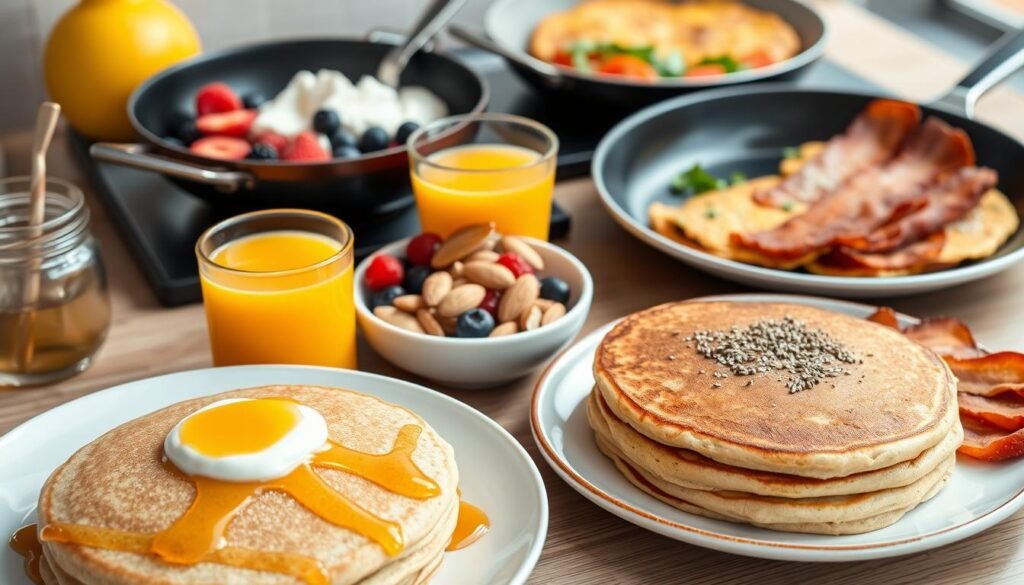
I wrote this guide for lifters who want to make every meal count. If you aim for muscle growth, faster recovery, or smart fat loss, breakfast is key. High-protein meals in the morning boost muscle protein synthesis.
For example, a 60-kg athlete needs about 96 g protein daily. Breakfast can help reach this goal with protein, carbs, and healthy fats. In this article, I share 15 high-protein breakfasts for bodybuilding. You’ll find egg dishes, smoothies, oats, yogurt bowls, meat, fish, and plant-based options.
I’ll cover recipes for bulking and cutting, quick meals for busy days, and vegetarian and vegan choices. I’ll also warn you about common mistakes in ready-to-eat foods, like added sugars, excess fat, and high sodium.
Keep reading for protein-rich ideas that fuel your workouts, control hunger, and help you gain muscle from the start of your day.
Key Notes;
- Starting the day with protein boosts muscle repair, growth, and energy for workouts.
- Hitting daily protein targets is easier when breakfast contributes a solid portion.
- 15 high-protein breakfasts for bodybuilding include eggs, shakes, oats, dairy, meat, and plant options.
- Choose recipes that match your goal—bulking, cutting, or training timing—and watch for added sugar and sodium.
- I provide quick, make-ahead, and portable ideas to keep you consistent on busy mornings.
Why morning protein matters for muscle repair and growth
I explain why a good breakfast is important for your workouts and recovery. After 8–10 hours without eating, your body starts to break down muscles a bit. Eating protein in the morning helps fix muscles stressed from workouts.
The role of breakfast in muscle protein synthesis
Muscle protein synthesis (MPS) needs nutrients to grow. Eating amino acids in the morning boosts MPS. This helps build muscle.
I follow advice to eat protein in 3–5 meals a day. This keeps MPS going all day. Aiming for 20–35 g of protein at breakfast is a good start.
Daily protein targets and math for bodybuilders
Setting protein goals makes planning meals easier. Studies say 1.6 g/kg body weight is best for muscle growth. Or, use 0.7–1.0 g per pound of lean body mass.
For example, a 60-kg athlete needs about 96 g of protein daily. Spread that over three meals, and you get 32 g per meal. Plant-based eaters might need more because plant proteins are less dense.
Benefits beyond hypertrophy: energy, appetite control, and fat loss
Protein in the morning keeps your energy up and reduces hunger later. This helps with weight loss and keeps muscle. For weightlifters, it means better workouts in the morning.
Skipping breakfast makes it hard to meet protein and calorie needs. It can also lead to muscle loss. So, I choose a protein-rich breakfast to support recovery and performance.
- Practical takeaway: prioritize high-protein morning meals to restart MPS and stabilize appetite.
- Goal setting: aim for 1.6 g/kg per day and spread protein evenly across meals.
- Application: choose a high protein breakfast for muscle gain and fat loss to support recovery and performance.
High-Protein Breakfasts for Bodybuilding
I’ve made a simple guide for you. It shows how to pick the best breakfast for your workout goals. You’ll find ideas like egg plates, smoothies, and more. Each meal can help with bulking, cutting, or getting ready for a workout.
I’ve sorted meals by what you need. For bulking, add foods like avocado and nuts. For cutting, choose lean proteins and watch your portions. Before a workout, pick carbs and proteins that are easy to digest.
Many people look for tips online. So, I’ve made meals that match what you’ll find on bodybuilding forums. You’ll see familiar foods and options to swap them up.
The 15 breakfasts I suggest are:
- Egg-based dishes — omelets, scrambles, egg-white bowls.
- Protein smoothies and shakes — whey, plant blends, yogurt bases.
- Oats, overnight oats, and grain bowls boosted with powders and seeds.
- Greek yogurt, skyr, kefir bowls with fruit and nuts.
- Meat, fish, and poultry breakfasts — turkey bacon sandwiches, smoked salmon bowls.
- Plant-based options — tofu scrambles, tempeh bowls, legume-grain combos.
- Quick and portable items — high-protein bars, ready-made shakes, meal-prep wraps.
I want you to aim for good protein without making things too hard. Use foods like Greek yogurt and protein powder to boost your protein. Mixing foods is a good idea, like oats with protein powder and yogurt.
| Meal Type | Typical Protein per Serving | Best Goal Fit |
|---|---|---|
| Overnight oats + protein powder | ~22 g | All goals; tweak calories for bulk or cut |
| Peanut butter toast + soft-boiled eggs | ~24 g | Pre-workout or moderate bulking |
| Greek yogurt bowl with fruit and seeds | ~16 g | Cutting and recovery days |
| Whey shake + banana | 20–30 g depending on scoop | Pre-workout or fast convenience |
| Smoked salmon on rye | 25–28 g | Higher-calorie mornings, bulking |
| Tofu scramble with beans | 18–26 g | Plant-based bulking or maintenance |
When counting calories, just multiply protein by servings. Always check labels for serving sizes and protein. Choose unsweetened soymilk or plain Greek yogurt to avoid too much sugar.
To hit your protein goals, start with a high-protein food. Add another protein and a small carb for workouts. This makes breakfasts easy and doable for most days.
Egg-based dishes and variations for muscle gain
I start my day with eggs because they’re full of protein, B vitamins, and more. I can switch between whole eggs and egg whites to control calories. This helps me build muscle without losing important nutrients.
Classic omelets and egg-white options
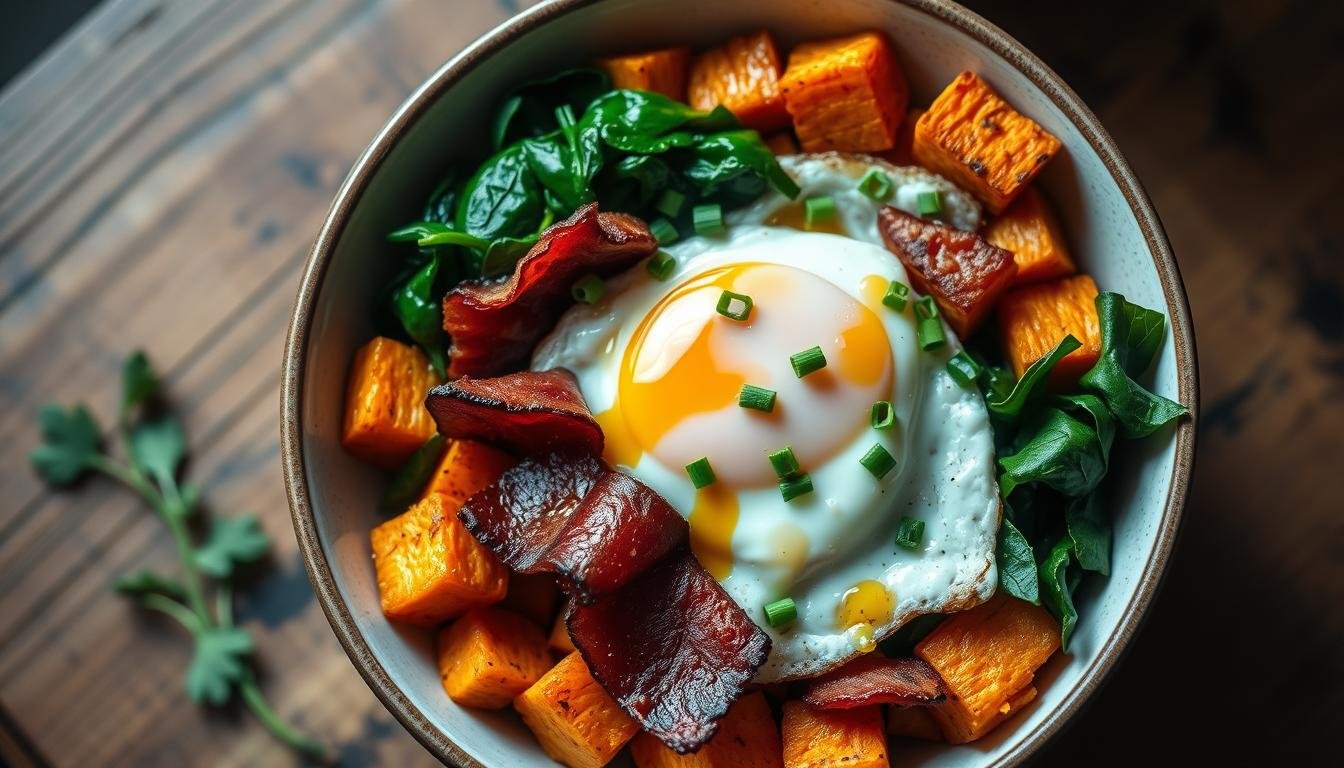
I make omelets with two whole eggs and two egg whites for about 20 grams of protein. For less fat, I use 1 cup egg whites. I add spinach, bell peppers, and a bit of feta for extra nutrients and taste.
Eggs for cutting and for bulking
When I’m cutting, I choose egg whites, mushrooms, and spinach. I use nonstick spray to avoid extra oil. For bulking, I add extra yolks, cheddar, avocado, and whole-grain bread. This way, eggs are key to my protein-rich breakfasts, no matter my goal.
Quick egg recipes for busy mornings
Soft-boiled eggs with peanut butter on whole-grain toast are a quick, high-protein meal. I also microwave two eggs with tomatoes and spinach when I’m in a rush. On Sundays, I bake egg muffins with turkey sausage and veggies for the week.
Practical tip: eggs are packed with nutrients and usually safe for most people. But, those with high cholesterol or diabetes should talk to a doctor. I use cooking spray or a nonstick pan to cut fat without losing flavor. These tweaks make eggs a reliable choice for my protein-rich breakfasts.
Protein smoothies and shakes to fuel morning workouts
I look for quick, powerful shakes for training days and recovery. Smoothies can be a fast, high-protein breakfast for muscle gain and fat loss. Choose the right base, protein, and carbs wisely.
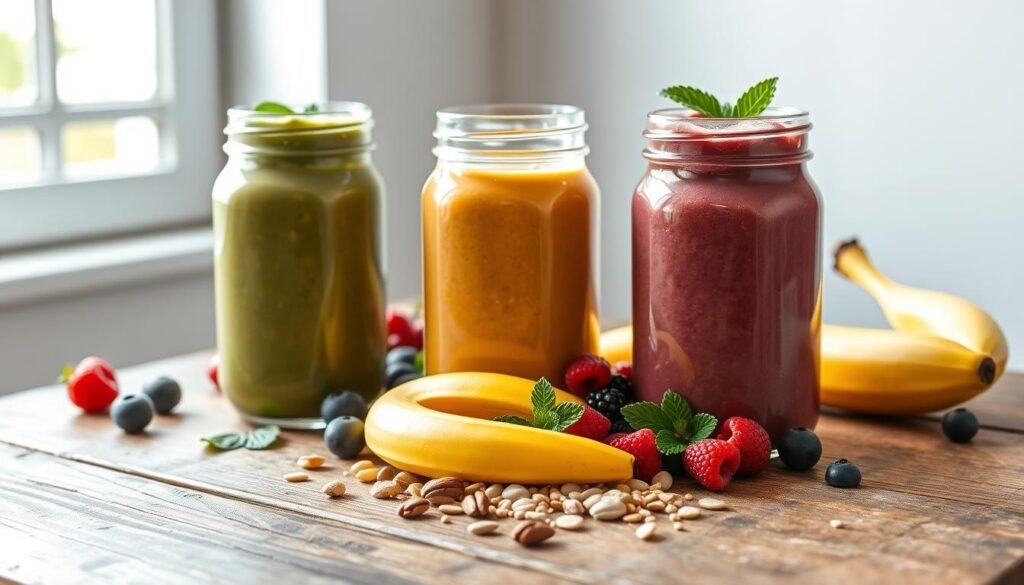
I aim for 20+ grams of protein in each smoothie. This helps with muscle growth and keeps me full.
High-protein smoothie templates
- Chocolate-peanut: 1 cup unsweetened soy milk, 150 g Greek yogurt, 1 tbsp peanut butter, 1/2 banana, ice. This mix can have 25–35 g protein without powder.
- Powder boost: 1 scoop whey (20–25 g), 1 cup milk, 1/2 cup berries, 1 tbsp flaxseed. It’s fast, creamy, and easy for early workouts.
- Recovery mix: 1 cup dairy milk, 1/2 cup cottage cheese, 1 tbsp honey, cinnamon, and frozen mango. It’s high in calories and protein for after heavy workouts.
Plant-based and dairy-free shake options
- Soy & tofu: 1 cup soymilk, 100 g silken tofu, 1 tbsp almond butter, frozen blueberries. It’s smooth and has 18–22 g protein, depending on milk.
- Pea protein blend: 1 scoop pea protein, 1 cup oat milk, 1 tbsp chia, 1/2 banana. It’s clean and allergen-friendly for consistent protein.
- Lentil boost: cooked red lentils blended with fruit, a splash of soy milk, and cinnamon. I use this for variety and plant protein.
Make-ahead smoothie packs and timing
- Pack frozen fruit, spinach, and measured seeds or oats in freezer bags. In the morning, add liquid and protein powder or yogurt.
- Prepare single-serve sachets of dry ingredients: protein powder, powdered milk, and spices. Combine with frozen pack for quick prep.
- I drink liquid protein 30–60 minutes before training for fuel. On fasted days, I choose a small protein + carb shake to avoid muscle breakdown.
Many store-bought smoothies lack protein. Always check labels and avoid too much sugar. I prefer whole foods like Greek yogurt or silken tofu for protein.
Using these templates helps me control calories and macros for muscle gain and fat loss. Consistent protein smoothies keep my mornings simple and recovery on track.
Oats, overnight oats, and high-protein grain bowls
I choose grains that give me steady carbs and protein for my workouts. These foods are great for bodybuilding breakfasts. They help me get 20–30 g of protein at each meal.
I start with 1/2 cup rolled oats, 3/4 cup milk, and 1/2 scoop whey. Then, I add 3 oz Greek yogurt, 1 tbsp chia, and a few almonds. This mix gives me about 20–25 g of protein. It’s perfect for when I’m on the go or need to get to the gym early.
For hot oatmeal, I cook 1/2 cup oats with milk. Then, I mix in cottage cheese or protein powder. Adding a tablespoon of peanut butter and pumpkin seeds gives me healthy fats and extra protein.
When I want something different, I make quinoa or amaranth bowls. I mix cooked quinoa with kefir or strained yogurt, nuts, and fruit. These bowls are great for changing up my usual oats.
Here are some quick swaps to hit your protein goals with little prep.
- Overnight boost: use soy milk instead of dairy for more plant protein. Or add 2 tbsp hemp seeds for extra protein.
- Hot mix-ins: add 1/2 cup cottage cheese after cooking for creamy texture and 12–14 g extra protein.
- Grain bowl tips: mix quinoa with chia and a scoop of protein powder for a balanced, easy-to-carry meal.
| Recipe | Typical Protein | Key Add-ins |
|---|---|---|
| Basic overnight oats | 20–25 g | Greek yogurt, chia, whey |
| Hot protein oatmeal | 22–30 g | Cottage cheese, nut butter, seeds |
| Quinoa/amaranth bowl | 18–28 g | Kefir, nuts, protein powder |
I adjust the amounts based on whether I’m cutting or bulking. For cutting, I use less nuts and nonfat dairy. For bulking, I add nut butter and extra seeds. These changes make my breakfasts flexible and reliable.
Greek yogurt, skyr, kefir, and dairy-based choices
I explore dairy options for busy mornings. Greek yogurt, skyr, and kefir are great for muscle repair and gut health. They make quick, protein-rich breakfasts that are easy to make.
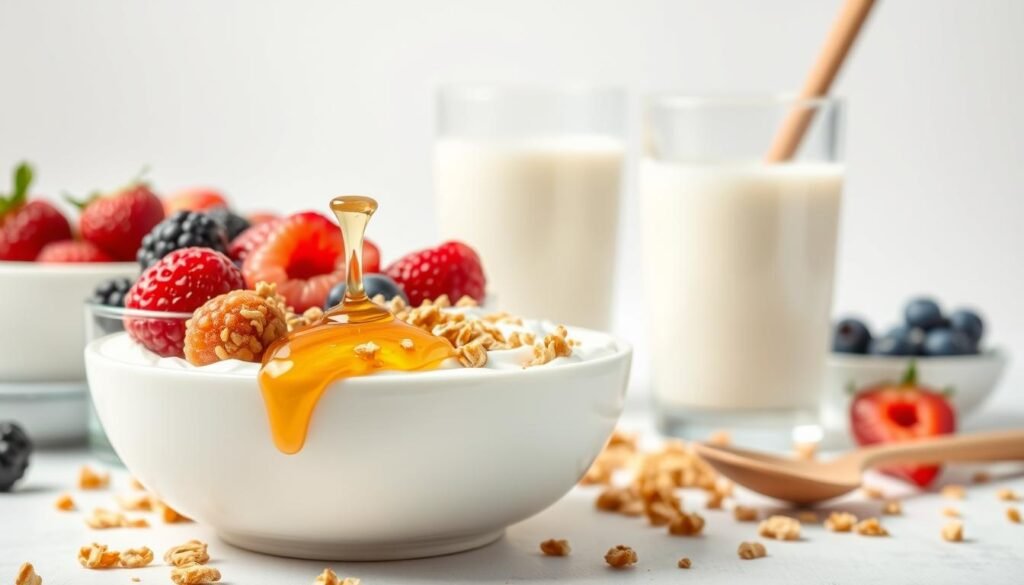
I start with 150 g of plain Greek yogurt. It has about 13.2 g of protein. You can mix it with berries, nuts, seeds, and a bit of granola.
Skyr from brands like Siggi’s or Icelandic Provisions is also good. It has more protein and is perfect for mason jars.
To add calories for bulking, try nut butter and chopped almonds. For cutting, use fresh fruit and chia seeds. They add fiber without too much sugar.
Kefir and strained yogurt for gut health and protein
Kefir has probiotics and a tangy taste. It’s great with protein powder or Greek yogurt. This mix keeps amino acids flowing for a long time.
Strained yogurts have more protein and less lactose. They digest slowly, giving you energy during workouts.
Convenience and portion control
Choose plain, unsweetened yogurts to avoid added sugars. Use single-serve containers and small bags for toppings. This helps with portion control and cutting goals.
Yogurt can also boost protein in cereal or oatmeal. Adding a scoop to hot oats or mixing skyr into overnight oats makes breakfasts more protein-rich.
| Item | Typical Serving | Approx. Protein | Best Use |
|---|---|---|---|
| Plain Greek yogurt (150 g) | 150 g | 13.2 g | Parfaits, bowls, mixed into oats |
| Skyr (Icelandic) | 150 g | 14–17 g | Mason-jar breakfasts, thick smoothies |
| Kefir (1 cup) | 240 ml | 8–10 g | Smoothies, probiotic boost |
| Whey protein (1 scoop) | 30 g | 20–25 g | Mix with kefir or yogurt for extra protein |
| Nuts & seeds (1 oz) | 28 g | 5–7 g | Increase fats and protein in bowls |
People often ask for quick breakfast ideas. High-protein breakfasts for bodybuilding on Reddit are popular. Try a yogurt protein breakfast twice a week to see how it affects your hunger, energy, and digestion.
Meat, fish, and poultry breakfasts for higher-calorie needs
I focus on protein-rich foods for bigger appetites and intense workouts. These meals give calories, amino acids, and ways to meet calorie needs. I pair lean proteins with whole grains and veggies for balance.
Turkey bacon and hearty breakfast sandwiches are quick and easy. A turkey bacon, egg, and low-fat cheese sandwich on whole-grain English muffin has 20+ grams of protein. It’s a great choice for training mornings.
Fish porridge and savory bowls offer omega-3s and less saturated fat. Fish porridge has about 211 kcal and 14 g protein. Chicken porridge has around 181 kcal and 12 g protein. I avoid fried sides and ask for less salt in minced red meat porridge.
I keep lean cuts and prepared protein ready for quick meals. Cooked chicken breast, smoked salmon, canned tuna, and lean ham are easy to use. I grill chicken and portion smoked salmon for the week.
I track amounts to meet daily needs without overloading one meal. For example, a 60-kg athlete might use 310 g cooked chicken breast or 395 g cooked salmon across the day. I use 80–150 g portions at breakfast and spread the rest.
I’m careful with restaurant and ready-to-eat options. Some high-protein items have high sodium or hidden sauces. McDonald’s grilled chicken salad is salty. I ask for clear broth and minimal sauces in street-food porridge or café bowls.
I use simple meal-prep rules for meat-based breakfasts for cutting or bulking. For cutting, I use 80–100 g lean protein with veggies and lighter grains. For bulking, I increase the portion to 150–200 g, add starchy sides, and include healthy fats like avocado. These swaps help me adapt to any calorie goal.
| Breakfast Option | Typical Portion | Approx. Calories | Approx. Protein | Notes |
|---|---|---|---|---|
| Turkey bacon, egg, cheese sandwich (English muffin) | 1 sandwich | 300–380 kcal | 20–25 g | Good quick meal; choose low-fat cheese for lower calories |
| Fish porridge (savory) | 1 bowl | ~211 kcal | ~14 g | Provides omega-3s; ask for less salt |
| Chicken porridge (savory) | 1 bowl | ~181 kcal | ~12 g | Lower fat than minced meat option |
| Grilled chicken breast (meal-prep) | 120 g cooked | ~200 kcal | ~36 g | Versatile; portion into bowls or sandwiches |
| Smoked salmon on toast | 75 g salmon + 1 slice whole-grain | ~250 kcal | ~20 g | Rich in omega-3s; pairs well with cottage cheese or eggs |
| Canned tuna breakfast bowl | 100 g tuna | ~120 kcal | ~25 g | Low prep; mix with grains and veggies for balance |
Plant-based and vegetarian high-protein morning meals
I look for high-protein foods that fit my training and recovery needs. A plant-based breakfast can be as good as meat-based ones with the right mix. Athletes often aim for 25–35 g of protein per meal.
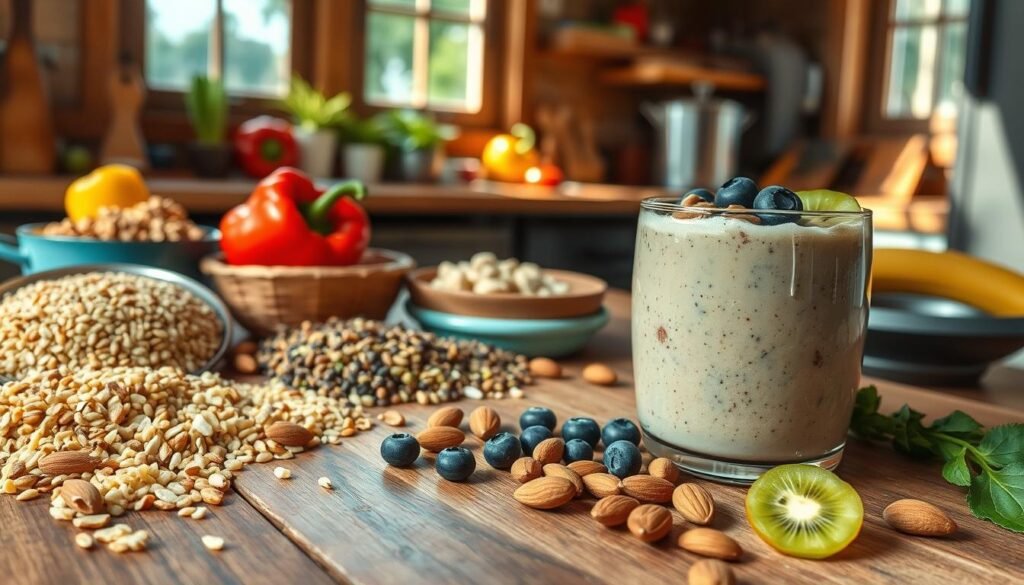
I have three daily plans. First, tofu or tempeh scrambles offer protein and texture. Second, legumes and grains together give all amino acids. Third, plant-based milks and proteins make smoothies and oats high in protein.
Tofu and tempeh scrambles
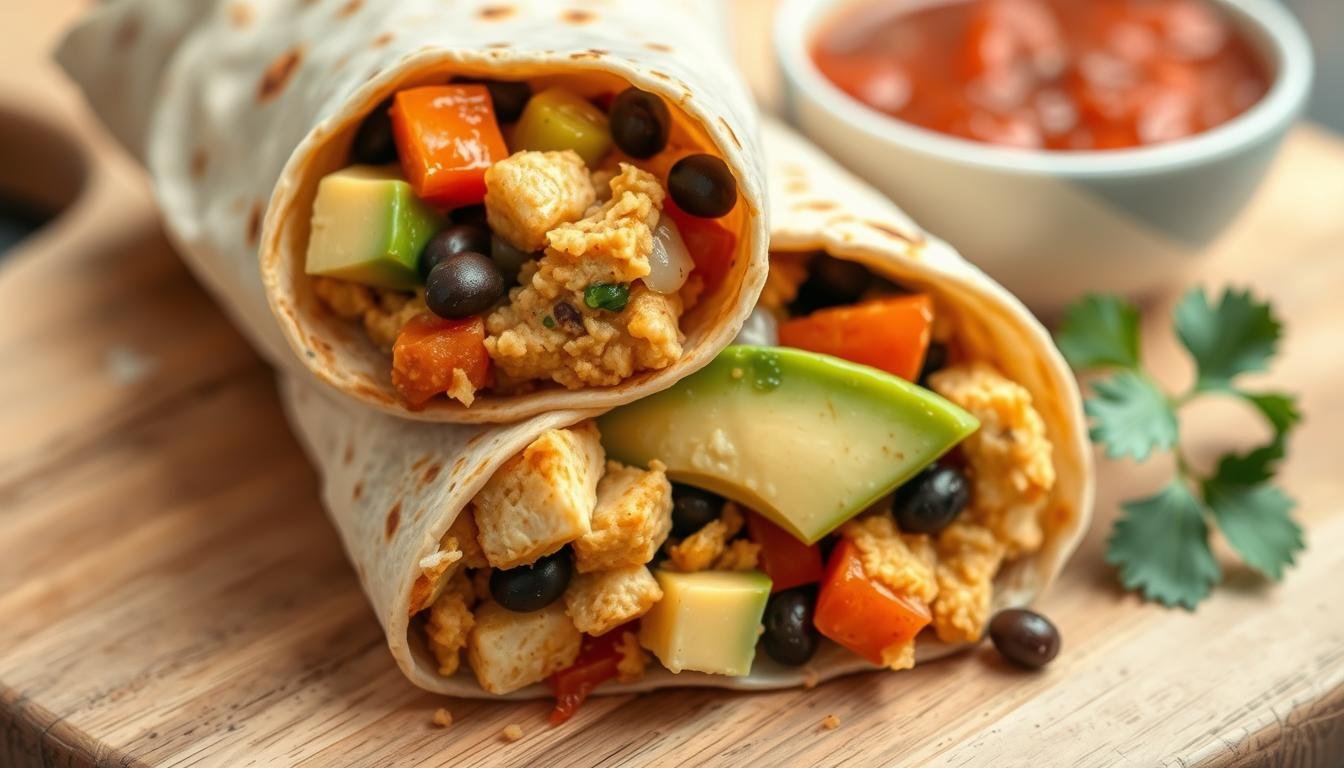
I mix firm tofu with peppers, spinach, and nutritional yeast for a tasty dish. Tempeh, crumbled and marinated, adds a chewy texture. To meet protein needs, add 150–200 g tofu or 100–150 g tempeh.
Legume-based breakfasts and grain-legume combos
I make chickpea flour omelets and red lentil pancakes for extra protein. A quinoa-and-lentil bowl gives a complete protein mix. Adding pea protein to smoothies boosts protein without changing taste.
Dairy alternatives and plant proteins
I pick unsweetened soymilk and fortified soy yogurt for more protein. Pea or soy protein powders help smoothies and oats reach 20 g of protein. Nut butters and seeds add calories and amino acids, but I watch portion sizes during fat loss.
Plant-based athletes might need more food or supplements to meet protein goals. I plan meals to ensure a plant-based breakfast supports muscle growth and fat loss.
Quick, portable, and ready-to-eat options for busy lifters
Mornings can be crazy. I have a list of quick, protein-rich breakfasts for bodybuilding. These are perfect when I’m in a rush.
I look for foods that are easy to carry and don’t spoil easily. Ready-to-drink shakes, protein bars, and canned chicken are great. I check the labels to avoid bad stuff.
I prepare simple meals the night before. Egg muffins, yogurt jars, and overnight oats are easy. Freezing smoothie packs saves time and keeps things fresh.
High-protein bars, shakes, and ready meals
When I’m short on time, I grab bars or shakes with 15–30 g protein. Quest and Premier Protein are good choices. I avoid added sugar and saturated fat.
I also have Greek yogurt cups and pouched tuna for whole foods. Some breakfast pancakes with chicken mayo are high in protein. But I check the sugar and sodium first.
Grab-and-go combos and meal-prep tips
I make egg muffins in a muffin tin for quick breakfasts. I layer yogurt, berries, and granola in jars. Overnight oats are ready in the fridge.
I cook lean chicken or turkey breast and portion it out. This helps me stay on track when I’m cutting calories.
Smart fast-food and takeout choices
If I eat out, I choose grilled proteins over fried. A grilled chicken salad from McDonald’s has about 20 g protein. I balance it with lower-sodium meals.
I avoid fried pastries and crullers. Instead, I opt for clear broths, grilled egg sandwiches, and plain yogurt cups. These are higher in protein.
I’m careful with ready-to-eat foods. Many have hidden sugars, saturated fat, and high sodium. I prefer whole foods and use whey or plant protein powder for extra protein.
I check out forums like high-protein breakfasts for bodybuilding reddit for new ideas. But I stick to what works for me. These protein-packed breakfasts fuel me, even on busy mornings.
How to customize breakfasts for cutting, bulking, and training times
I show you how to make bodybuilding breakfasts your own. Start by setting a protein goal for each meal. Then, adjust calories and fats to fit your needs. Simple swaps can help you meet your goals, whether you’re working out or fasting.
For bulking, I add more calories with whole eggs, peanut or almond butter, avocado, and full-fat Greek yogurt. Extra oats or whole-grain bread also help. This way, you get 25–40 g of protein per meal or more.
When cutting, I choose lean proteins like egg whites, nonfat Greek yogurt, or white fish. I limit fats and control portions to keep calories low. This helps keep protein high without adding too many calories.
Timing around morning workouts and intermittent fasting considerations
If I work out first, I have a small snack before. It has simple carbs and 10–20 g of protein. Or, I have a full breakfast 60–90 minutes before. This boosts performance and reduces muscle loss.
Time-restricted eating makes it hard to hit daily protein goals. To protect muscle, I suggest a protein shake or a small breakfast sooner.
Sample meal templates and portion swaps
I use quick templates to meet protein targets. You can adjust calories to fit your needs.
- Overnight oats + 1 scoop whey = +20 g protein; swap 1/2 cup oats for 3/4 cup cooked quinoa for a lower glycemic option.
- Greek yogurt (150 g) + 2 tbsp nut butter + fruit ≈ 20–25 g protein; switch to nonfat yogurt and add a scoop of protein powder to cut calories.
- Egg sandwich: 2 whole eggs + turkey bacon on whole-grain bread ≈ 20–30 g protein; use egg whites and low-carb bread for cutting.
| Goal | Protein per Meal | Typical Foods | Easy Swap |
|---|---|---|---|
| Bulking | 30–40 g | Whole eggs, oats, nut butter, full-fat Greek yogurt | Add extra scoop of whey or an extra egg |
| Maintenance | 25–30 g | Eggs, cottage cheese, oats with milk | Portion control; keep moderate fats |
| Cutting | 20–30 g | Egg whites, nonfat Greek yogurt, white fish | Swap nuts for powdered peanut butter |
Pro tip: Spread protein across 3–5 meals for best muscle growth. Aim for 25 g at key times—morning, midday, late afternoon, and evening.
Use these tips to make bodybuilding breakfasts fit your lifestyle. Focus on timing and protein when planning workouts and meals.
Conclusion
I think making a high-protein breakfast a priority is key. It helps with muscle repair and growth. It also improves your body’s shape. Eating about 1.6 g/kg of body weight in protein is important.
Try to eat 20–35 g of protein at breakfast. This depends on your size and what you want to achieve. Choose foods like eggs, Greek yogurt, and fish. Also, include plant-based options like tofu.
Use smoothies and other easy-to-carry foods for convenience. But, be careful of added sugars and salt in these items.
Try out the breakfast ideas in this guide. Adjust the amounts based on whether you’re cutting or bulking. Mix and match the 15 recipes to find the best breakfast for you.
If you need specific advice, talk to a registered dietitian or certified nutrition coach. They can help you set up a meal plan that fits your workout schedule.